As an Amazon Associate, This Will Fix It earns from qualifying purchases at no extra cost to you. We only recommend products we’d actually use.
Highest impact fix — 2026
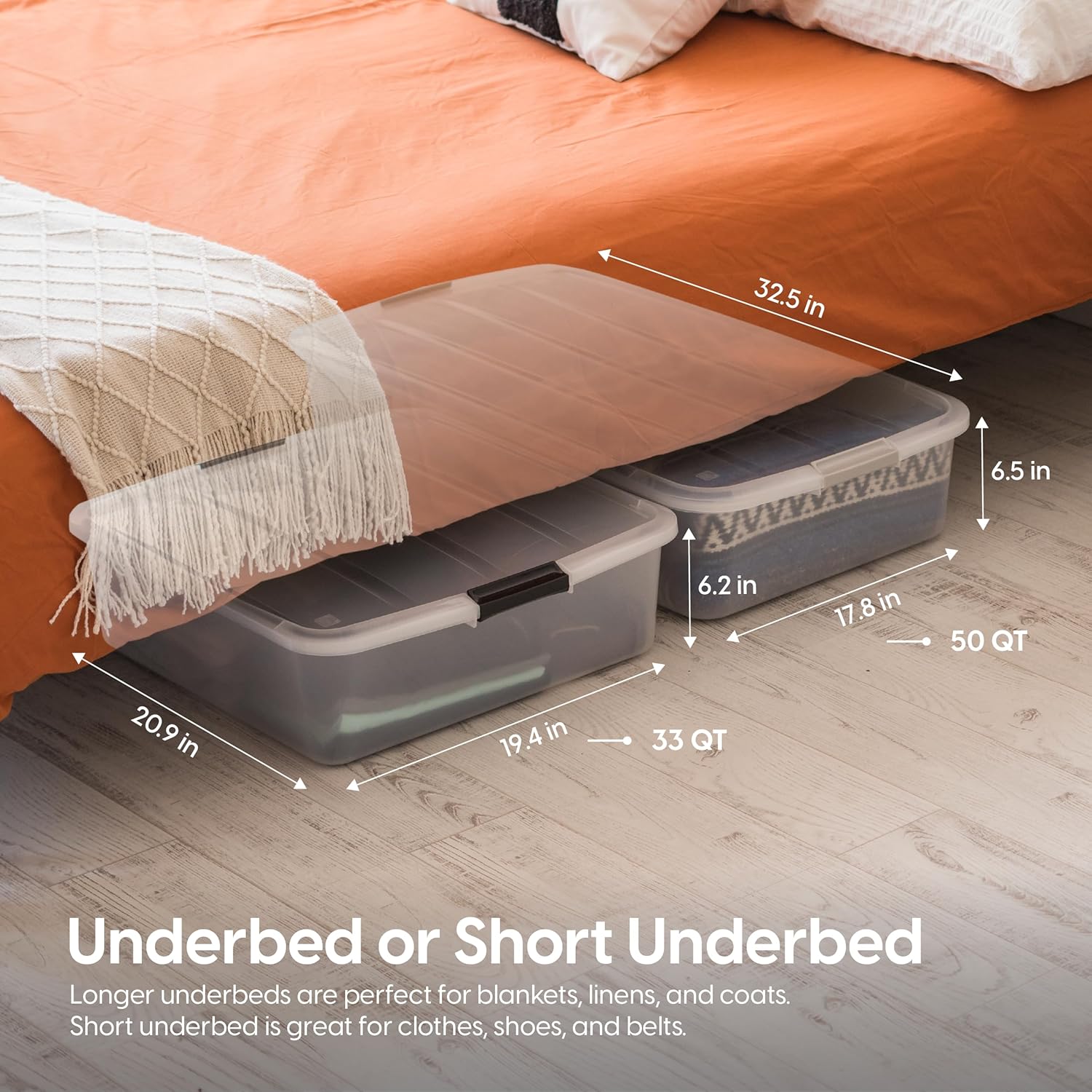
IRIS USA Under-Bed Storage Bins with Lids
The single fastest way to add significant storage to any bedroom — uses space that is almost always completely wasted. Flat wheeled design rolls in and out easily. Clear lids so you can see contents without pulling everything out.
Best for: bedrooms & small apartmentsNo tools neededPrice: ~$25–40 per set
Problem
Not enough storage — but the real issue is untapped vertical space, wasted floor space, and single-function furniture leaving room capacity on the table.
Fix
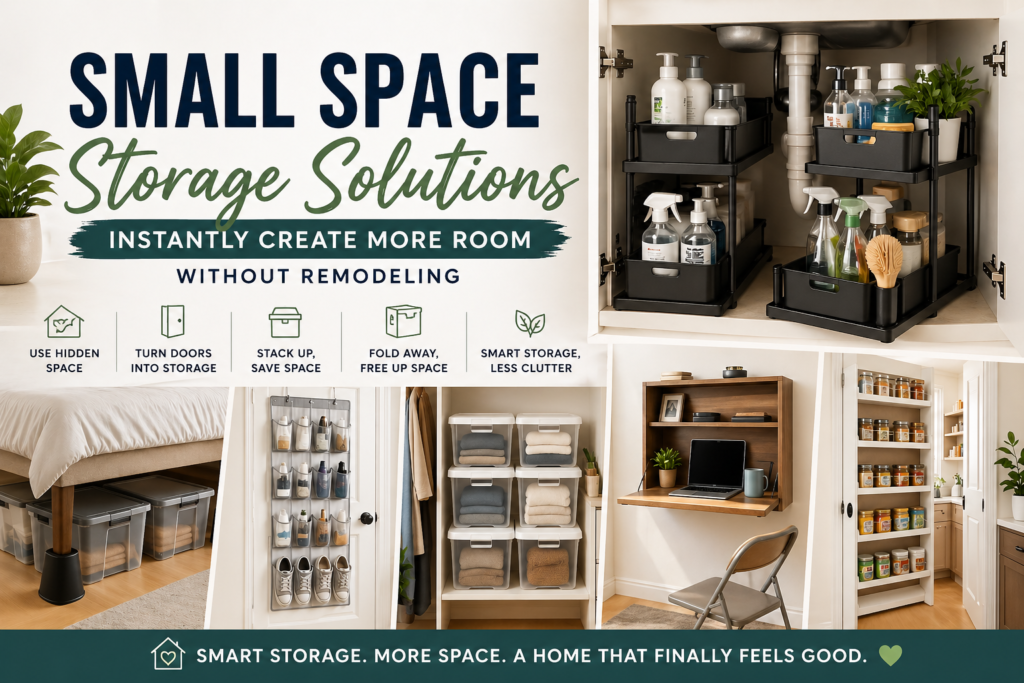
Storage solutions that use vertical walls, the space under furniture, and the backs of doors — without renovating, drilling, or buying new furniture.
Relief
A home that feels noticeably more spacious, with everything accessible and in its place — without having to move to a bigger space.
Why Small Spaces Feel More Cluttered Than They Are
Most small space storage problems are not actually a space problem. They are a system problem. The average home has significant unused capacity in three places that most people completely overlook — the space under every piece of furniture, the vertical wall space above counter and shelf height, and the backs of every door in the house. Tap any one of those three and the space problem typically becomes manageable without buying new furniture or moving to a bigger place.
I have spent 20 years maintaining and improving homes of all sizes. The homes that feel spacious and organized are not the ones with the most square footage — they are the ones where every surface, wall, and underutilized zone is working. The products and approaches below are the ones I have seen deliver the most immediate, visible improvement in small spaces across kitchens, bathrooms, bedrooms, and closets. These are practical fixes, not Pinterest fantasy organization systems.
Top Pick: Under-Bed Storage Bins — The Highest-Impact Small Space Fix
IRIS USA Under-Bed Storage Bins with Lids and Wheels
~$25–40 per set
Flat-profile clear bins with secure lids and smooth-rolling wheels — designed to slide in and out from under any standard bed frame. The clear body lets you see contents at a glance. Available in multiple sizes to fit twin through king bed frames. Stackable when stored elsewhere and strong enough to hold off-season clothes, extra bedding, shoes, or any items you need stored but not accessed daily.
Clear with secure lidRolling wheelsFits all bed sizesNo tools neededStackable
The space under a bed is the single most underused storage zone in most homes. A standard queen bed has roughly 20 cubic feet of space underneath it — equivalent to a large chest of drawers — that most people leave completely empty or fill with random items they cannot find later. A set of flat rolling under-bed bins converts that space into organized, accessible storage in about 10 minutes with no tools and no installation.
As someone who has worked on homes for over 20 years, this is the fix I recommend first for any bedroom storage problem before buying additional furniture, renting storage space, or anything else. If your bed clearance is less than 6 inches, add bed risers first — a $15 set lifts the frame 6 to 8 inches and creates the clearance you need. The under-bed solution then works in any bedroom regardless of current furniture layout. For a complete bedroom and bathroom organization approach, also see our guide to under-sink cabinet organizers which applies the same vertical zone principles to bathroom storage.
Scott’s tip: Use under-bed bins for off-season items only — the clothes, bedding, or gear that you need twice a year but not weekly. Storing daily-use items under the bed creates the constant pull-out-and-put-back friction that causes most storage systems to fail. Under-bed = seasonal storage. Daily items stay in drawers and closets where you can reach them without kneeling.
Pros
Uses completely wasted space — no floor footprint added
Rolling wheels make access easy without moving the bed
Clear body — see contents without removing the lid
No tools, no installation — setup in under 10 minutes
Affordable — one of the highest value-per-dollar storage solutions available
Watch-outs
Requires at least 6 inches of bed clearance — add risers if needed
Not suited for daily-access items — best for seasonal storage
Dust accumulates — use lidded bins only, not open ones
Fix 2: Over-The-Door Organizers — Zero Floor Footprint, Instant Storage
Every door in your home has a completely unused storage zone on its back. An over-door organizer hangs from the top of the door frame in seconds with no drilling, no damage, and no tools. For bathrooms, pantries, bedroom doors, and closet doors it adds a full column of organized pockets or shelves that takes up zero floor space. This is the best renter-friendly storage upgrade available — and it works as well in owned homes as in apartments.
Over-the-Door Organizer with Multiple Pockets
~$15–30
Hangs over any standard door in seconds with two steel hooks. Multiple pockets in different sizes handle shoes, toiletries, cleaning products, snacks, accessories, and small tools. Works on bedroom, bathroom, pantry, and closet doors. For pantry use it completely transforms the inside of a door from blank space to organized storage for spices, foil rolls, bags, and small bottles.
No tools or drillingAll door typesMultiple pocket sizesRenter-friendly
Fix 3: Floating Wall Shelves — Vertical Space Is Your Biggest Untapped Resource
Most homes use the first 6 feet of wall height and leave everything above completely empty. Floating shelves on walls above counters, desks, beds, and sofas convert that dead space into real usable storage. In a kitchen, two rows of floating shelves above the counter can eliminate the need for a separate pantry unit. In a bedroom, a shelf above the headboard handles books, chargers, and small items that otherwise crowd the nightstand.
Floating Wall Shelves — Set of 3
~$20–45
Pre-drilled wall-mount shelves with hidden hardware — clean look with no visible brackets. A set of 3 creates a stacked column of storage on any wall with enough vertical space. Works in kitchens, bedrooms, bathrooms, offices, and living rooms. Install at different heights for different item sizes. Most sets hold 20 to 30 lbs per shelf — sufficient for books, plants, kitchen items, or bathroom products.
Hidden hardwareSet of 320–30 lb capacity eachAny room
From 20 years of home work: Always anchor floating shelves into wall studs or use proper drywall anchors rated for the load. A shelf that fails and comes off the wall damages everything on it and the wall itself. The 5 minutes to find a stud with a stud finder is worth it every time. I use a magnetic stud finder — no batteries, never fails.
Fix 4: Stackable Clear Bins — Maximize Every Cabinet and Closet
Most cabinets and closets waste 40 to 60 percent of their vertical capacity because items of different sizes cannot stack reliably. A uniform set of clear stackable bins solves this completely — same dimensions, stack to the ceiling, and because they are clear you can see what is in each one without pulling anything down. This fix works in pantries, bathroom cabinets, linen closets, garage shelves, and under-sink cabinets.
Stackable Clear Storage Bins with Lids — Set of 6
~$20–40
Uniform clear bins with secure snap lids that stack reliably without tipping. A set of 6 covers a full pantry shelf or bathroom cabinet floor-to-ceiling. Label the front of each bin with a label maker or masking tape for instant findability. Available in small, medium, and large — mix sizes to match your contents. The consistent dimensions are the key feature: they stack predictably and use every inch of vertical shelf space.
Clear — see contents at glanceSecure snap lidsSet of 6Pantry · closet · cabinet
Fix 5: Over-Toilet Shelf Unit — The Bathroom’s Most Wasted Space
The wall space above a toilet is almost always empty in small bathrooms despite being perfectly accessible. A freestanding over-toilet shelf unit drops over the toilet tank with no drilling, no tools, and no installation — and immediately adds two to three shelves of organized storage for towels, toiletries, toilet paper, and bathroom products. For small bathrooms this is often the single most impactful storage addition possible.
Over-Toilet Storage Shelf Unit — 3-Tier
~$30–60
Freestanding 3-tier shelving unit that sits over the toilet tank without touching the wall or requiring any installation. Adjustable shelf height accommodates different toilet models. The two side legs straddle the toilet and the shelves span the width above the tank. Add small baskets or bins on each shelf to organize items by category. One of the most immediate visual improvements for a small bathroom.
No drilling or tools3-tier storageAdjustable heightFreestanding
Watch-out: Before buying any storage solution, clear out the space first. Buying organizers before decluttering is one of the most common small space mistakes — you end up with an organized collection of things you do not need. Spend 30 minutes editing the space before adding any new storage product. What you remove is almost always more valuable than what you add.
How to Add Storage to a Small Space Without Major Renovation
1
Start with under-bed storage
Measure the clearance under your bed frame. If it is less than 6 inches, add bed risers to create room for flat under-bed bins. This is the single highest-capacity storage addition you can make in a bedroom without touching the walls or floor plan.
2
Add over-door organizers to every door
Every door in your home has unused storage on its back face. Over-door organizers for the pantry, bathroom, bedroom, and closet doors add storage without floor space or drilling. Hang one on every door and fill it with the small items that currently have no designated home.
3
Install floating shelves on empty walls
Identify walls with open space above furniture or counters. Floating shelves at eye level and above use vertical space that is otherwise empty. Start with one wall in your most cluttered room — the kitchen or bedroom is usually the highest-impact starting point.
4
Replace single-function furniture with storage pieces
Swap a regular ottoman for a storage ottoman. Replace a standard coffee table with one that has drawers or lift-top storage. Every piece of furniture that adds a storage function eliminates the need for a separate storage unit without taking additional floor space.
5
Standardize to stackable clear bins in every cabinet
Replace a mix of mismatched containers with uniform stackable clear bins in cabinets, closets, and pantries. Uniform sizes stack to the top of the shelf — typically adding 40 to 60 percent more usable capacity — and clear bodies mean you find things without moving everything else out of the way.
Related fix: If kitchen storage is your biggest problem, our guide to the best under-sink cabinet organizers covers the most overlooked kitchen storage zone specifically — including how to work around pipes to double your under-sink capacity.
Common Questions About Small Space Storage
The five highest-impact small apartment storage solutions are: under-bed storage bins (uses space that is almost always empty), over-the-door organizers (zero floor footprint, instant install), floating wall shelves (adds storage without taking floor space), storage ottomans (furniture that doubles as storage), and stackable clear bins with lids (maximizes vertical space in closets and cabinets). Start with under-bed storage — it delivers the most new storage space for the least cost and effort.
Focus on vertical space and the area under your bed. Bed risers add 6 to 8 inches of clearance under your existing bed frame, creating enough space for large under-bed bins or rolling drawers. On the walls, floating shelves above the bed and beside the door add significant storage without consuming floor space. Over-door organizers on the bedroom and closet doors handle shoes, accessories, and small items without any drilling.
The most effective small kitchen storage approach combines three elements: a tension rod under the sink to hang spray bottles and double usable cabinet space, magnetic strips on the wall for knives and metal utensils, and stackable clear pantry bins that let you use the full vertical height of your cabinets. For counter organization, a pegboard on the wall keeps tools accessible without consuming counter space.
Over-the-door organizers hang without drilling. Command adhesive hooks and strips hold up to 7.5 lbs per hook without wall damage and remove cleanly. Tension rods install without tools in cabinets, between walls, or in closets. Freestanding shelving units require no installation at all. For renters these four approaches deliver the same storage benefit as drilled solutions without lease violations.
Yes — floating shelves are one of the most efficient small-space storage solutions because they use vertical wall space that is otherwise completely wasted. A standard wall can hold 3 to 4 rows of floating shelves from counter height to ceiling, adding substantial storage without taking a single square foot of floor space. They work in kitchens, bedrooms, bathrooms, and living rooms.
Home repair & organization DIYer — 20+ years hands-on experience
I’ve been maintaining, improving, and organizing homes for over 20 years — from plumbing and electrical work to storage systems and decluttering projects. The small space storage solutions on this page are the approaches I have seen work repeatedly across different types of homes and room sizes. Read more about Scott →
Ready to create more room?
Start with under-bed storage — it is the fastest, highest-impact small space fix for most homes. No tools, no installation, immediate results.
As a former city-dweller, the strongest part of this article is its focus on using overlooked space instead of adding bulky furniture you simply don’t have room for. Under-bed bins, over-door organizers, and floating shelves are all smart picks because they add storage without eating up precious floor area.
I also like the renter-friendly angle, since a lot of people in small spaces need options that do not require drilling or a full remodel. The emphasis on decluttering first is a good call too, because storage only works when the system stays simple enough to maintain.
One question I’d ask is whether the best solution changes more by room type or by how often you need access to the items. Another thought: for someone with a truly tiny apartment, would you rank multi-purpose furniture above wall storage, or still start with the “hidden” zones first?
Thank you — really glad that angle came through clearly. You nailed the core idea: adding storage without losing floor space is the whole game in a small home.
To your question — access frequency wins over room type every time. If you’re reaching for something daily it needs to be at eye level and easy to grab. If it’s seasonal or rarely used, that’s what goes under the bed or high on a shelf. Room type is secondary to that logic.
On multi-purpose furniture versus hidden zones — for a truly tiny apartment, hidden zones first. They cost almost nothing and free up space immediately. Multi-purpose furniture like an ottoman with storage or a bed frame with drawers is a great second step once you’ve exhausted the free real estate you already have.


As a former city-dweller, the strongest part of this article is its focus on using overlooked space instead of adding bulky furniture you simply don’t have room for. Under-bed bins, over-door organizers, and floating shelves are all smart picks because they add storage without eating up precious floor area.
I also like the renter-friendly angle, since a lot of people in small spaces need options that do not require drilling or a full remodel. The emphasis on decluttering first is a good call too, because storage only works when the system stays simple enough to maintain.
One question I’d ask is whether the best solution changes more by room type or by how often you need access to the items. Another thought: for someone with a truly tiny apartment, would you rank multi-purpose furniture above wall storage, or still start with the “hidden” zones first?
Thank you — really glad that angle came through clearly. You nailed the core idea: adding storage without losing floor space is the whole game in a small home.
To your question — access frequency wins over room type every time. If you’re reaching for something daily it needs to be at eye level and easy to grab. If it’s seasonal or rarely used, that’s what goes under the bed or high on a shelf. Room type is secondary to that logic.
On multi-purpose furniture versus hidden zones — for a truly tiny apartment, hidden zones first. They cost almost nothing and free up space immediately. Multi-purpose furniture like an ottoman with storage or a bed frame with drawers is a great second step once you’ve exhausted the free real estate you already have.
What’s the trickiest room you’re working with?